
 Cart is empty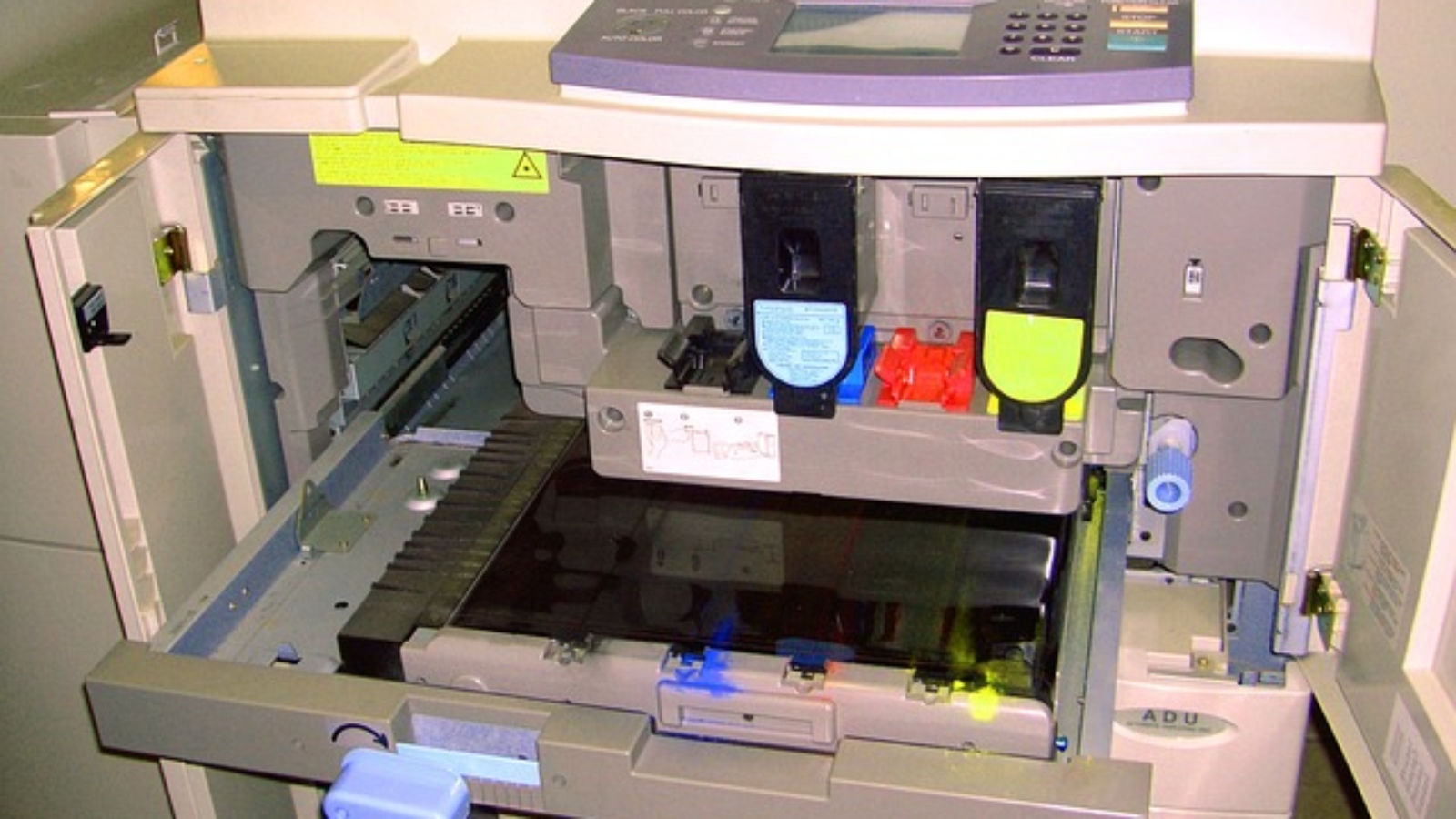
Printing has a long and fascinating history that spans thousands of years, evolving from ancient methods to the advanced technologies we use today. Let’s take a journey through time to explore the key milestones in the history of printing.
Ancient Printing Methods
Woodblock Printing (3rd Century AD)
The origins of printing can be traced back to ancient China, where woodblock printing was developed.
- Process: Artisans carved images and text into wooden blocks, applied ink, and pressed the blocks onto paper or fabric.
- Significance: This method was used for printing on textiles and later for reproducing Buddhist scriptures, making it one of the earliest forms of printing.
The Birth of Movable Type
Movable Type Printing (1040 AD)
The next major advancement came with the invention of movable type printing by Bi Sheng in China.
- Process: Individual characters were made from clay and placed into an iron frame. These could be rearranged and reused to print different texts.
- Significance: Movable type allowed for more efficient and versatile printing compared to woodblock printing.
The Printing Revolution
The Gutenberg Press (1440 AD)
Johannes Gutenberg, a German blacksmith, introduced the mechanical movable type printing press, which revolutionized the printing industry.
- Process: Gutenberg’s press used metal movable type and an innovative printing press mechanism to transfer ink onto paper.
- Significance: This invention made mass production of books possible, leading to the spread of knowledge and literacy during the Renaissance.
Industrial Era Innovations
Steam-Powered Printing Press (1800s)
The Industrial Revolution brought significant advancements in printing technology, including the steam-powered printing press.
- Inventors: Friedrich Koenig and Andreas Friedrich Bauer developed the first steam-powered press in 1814.
- Significance: These presses could print much faster than manual presses, drastically increasing the volume of printed materials and reducing costs.
Lithography (1796)
Alois Senefelder invented lithography, a printing method based on the principle that oil and water do not mix.
- Process: Images were drawn with a greasy substance on a flat stone, then treated with water and ink. The ink adhered only to the greasy areas, which were then pressed onto paper.
- Significance: Lithography allowed for high-quality image reproduction and was widely used for printing artwork and maps.
The Advent of Modern Printing
Offset Printing (1875)
Offset printing, invented by Robert Barclay, became the dominant commercial printing method in the 20th century.
- Process: Ink is transferred from a plate to a rubber blanket, then onto the printing surface. This indirect method produces high-quality prints and is efficient for large print runs.
- Significance: Offset printing remains a staple in the publishing industry due to its reliability and quality.
Photocopying (1938)
Chester Carlson invented the first photocopying process, known as xerography.
- Process: Carlson’s process used static electricity to transfer toner to paper, which was then fused with heat.
- Significance: Photocopying revolutionized office work, making it easy to reproduce documents quickly and cheaply.
Digital Printing Era
Inkjet Printers (1970s)
Inkjet printing technology was developed in the 1970s and became commercially available in the 1980s.
- Process: Inkjet printers spray tiny droplets of ink onto paper to create images and text.
- Significance: Inkjet printers are popular for their affordability, ease of use, and ability to print high-quality color images.
Laser Printers (1970s)
Laser printers, introduced by Xerox in 1977, marked another leap in printing technology.
- Process: A laser beam creates an electrostatic image on a drum, which attracts toner particles. The toner is then transferred to paper and fused with heat.
- Significance: Laser printers are known for their speed, precision, and cost-effectiveness for high-volume printing.
The Rise of 3D Printing
3D Printing (1980s)
3D printing, also known as additive manufacturing, was developed in the 1980s and has rapidly advanced in recent years.
- Process: 3D printers build objects layer by layer from digital models, using materials such as plastic, metal, and resin.
- Significance: 3D printing has applications in various industries, including manufacturing, healthcare, and aerospace, enabling rapid prototyping and custom production.
Conclusion
From ancient woodblock printing to the cutting-edge technology of 3D printing, the history of printing is marked by continuous innovation and advancement. Each breakthrough has made printing more accessible, efficient, and versatile, profoundly impacting society and the dissemination of information. As we look to the future, we can expect further innovations that will continue to transform how we print and share knowledge.
Leave A Comment